

 Back
Back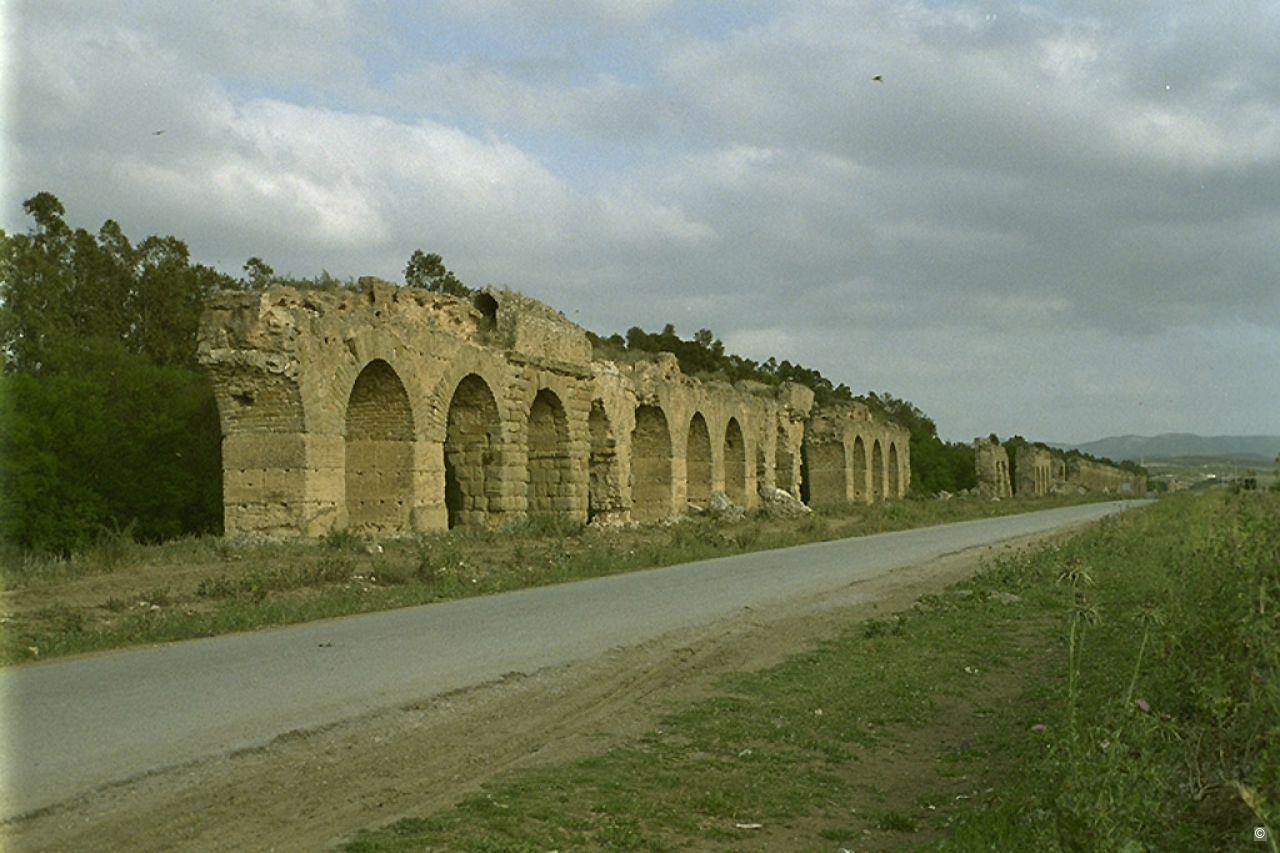
 Add to My Collection
Name of Monument:
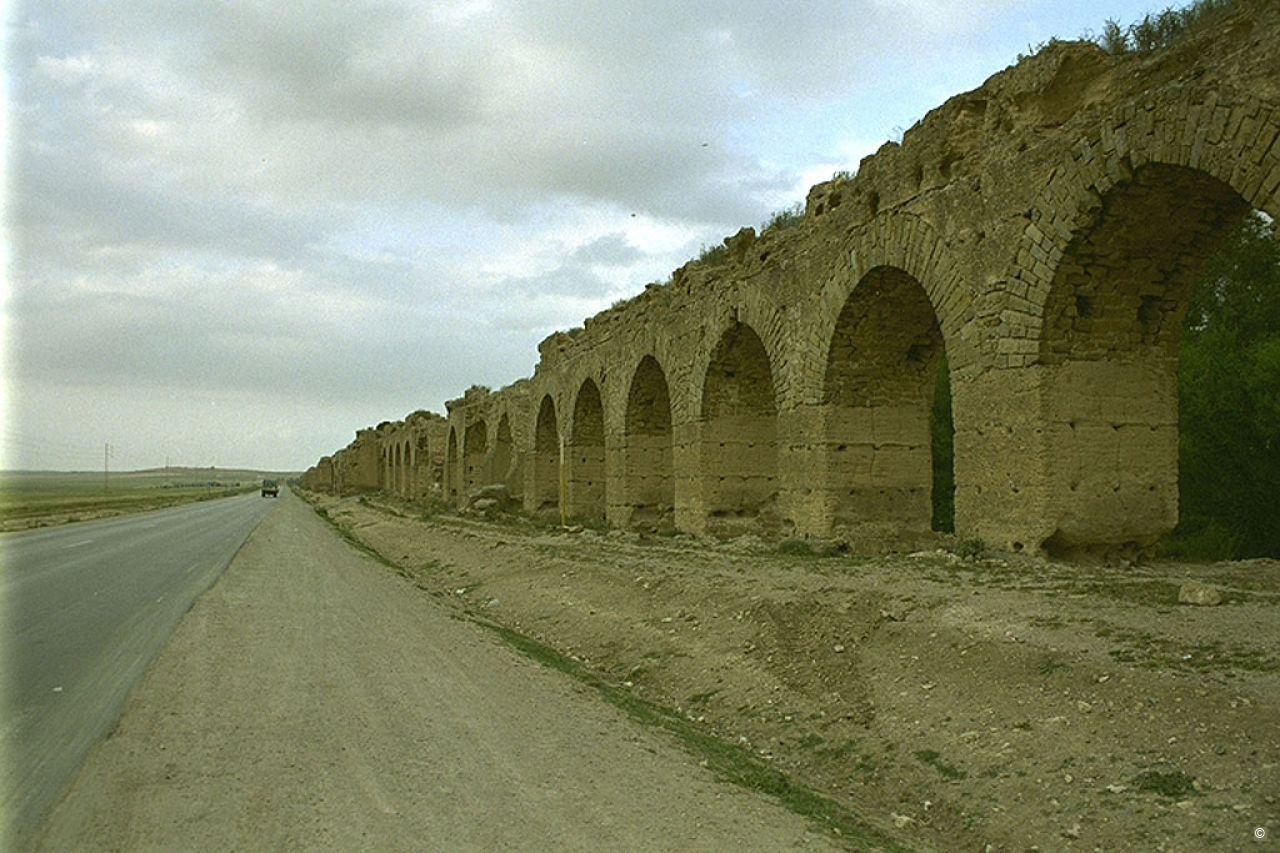
Zaghwan aqueduct
Location:
Zaghwan, Tunisia
Date of Monument:
1852
History:
Water problems were one of the Tunisian governments' constant preoccupations. It was the custom for wealthy people to build public fountains called sabils. Rulers, however, were preoccupied with the organisation of large scale water conveyance. In 1859, just before the establishment of the French protectorate and on the advice of the French consul Léon Roches, Mohamed Bey tasked the engineer Pierre Colin with the restoration of the old Roman aqueduct running from Zaghwan to Carthage, and its Hafsid era diversion towards Tunis, which had been out of use and abandoned for a long time. The works were completed in 1862, during Mohamed Sadok Bey's reign.
Description:
The hydraulic works are described in the general administration's 1883–1889 Public Works report as follows: "89 km of brick canal between Zaghwan and Goulette were refurbished, 41 km of metal piping has replaced the huge aqueducts at Djouggar, Oued Miliane, Djedeida and the Aryanah plains". Water supplies for Tunis and the beylical residences were thus assured. The piping was put into operation for the first time on 19 May 1862. You can still see the impressive row of columns and arches today.
Citation of this web page:
Saloua Khadhar Zangar "Zaghwan aqueduct" in "Sharing History", Museum With No Frontiers, 2026.
https://sharinghistory.museumwnf.org/database_item.php?id=monuments;AWE;tn;29;en
Prepared by: Saloua Khadhar Zangar
Translation by: Flaminia Baldwin
MWNF Working Number: TN 029
Related Content
On display in
Exhibition(s)
Sharing History
Great Inventions Of The 19th Century | Water: The Fount Of All Life | Overview Great Inventions Of The 19th Century | Water: The Fount Of All Life | Water DistributionWater in Islam
Water and Agriculture in Islamic Civilisation | Engineering the Flow: Irrigation Technologies and Water ManagementDownload
As PDF (including images) As Word (text only)