

 Back
Back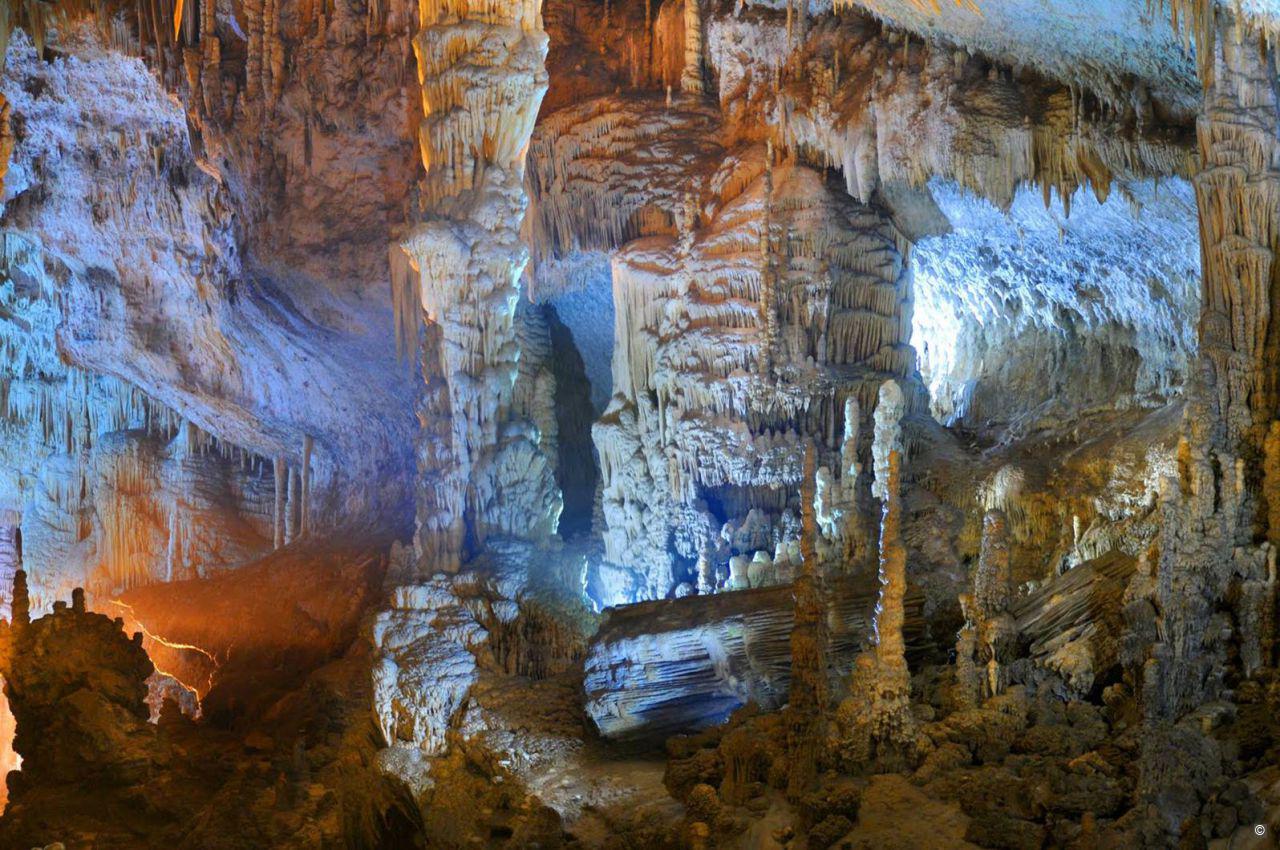
Name of Monument:
Jeita Grotto
Location:
Je'ita, Keserwan, Lebanon
Responsible Institution:
The Lebanese Ministry of Tourism
 About The Lebanese University, Je'ita, Keserwan
Date of Monument:
1836 (year of discovery)
History:
Although there is evidence the cave was used in antiquity, the modern discovery of the cave is credited to American missionary Reverend William Thomson, who ventured about 50 meters into the cave until reaching the underground river. He realised he had discovered a cave of great importance after firing a shot and hearing the resulting echoes. J. W. Maxwell and H. G. Huxley of the Beirut Water Company and Dr. Daniel Bliss, then president of the Syrian Protestant College (now the American University of Beirut) ventured a kilometre into the cave in two expeditions in 1873 and 1874. American, English and French explorers carried out further expeditions in 1892 and 1940 which brought them to a depth of 1,750 metres. Lebanese explorers pushed even further into the cave in the following decades.
Description:
Covering a span of over 9 kilometres, the Jeita Grotto forms the biggest Middle Eastern karstic cave complex. It consists of two different, but interconnected, caverns shaped over millions of years by the dissolution and accumulation of layers of limestone. The Jeita upper cave is 2,130 metres long, although only one third (750 metres) is open to visitors. The cave contains a variety of stone formations such as stalagmites, stalactites, natural columns, mushrooms, ponds, curtains and draperies. The lower cave is 60 metres beneath the first, and is almost three times as long. The floor of this cave consists of a long underwater river and lake, nicknamed the "Dark Lake". The lower cave is closed during the winter months due to high water levels.
Citation of this web page:
Julien El Khoury, Jeff El-Msanne "Jeita Grotto" in "Sharing History", Museum With No Frontiers, 2026.
https://sharinghistory.museumwnf.org/database_item.php?id=monuments;AWE;lb;53;en
Prepared by: Julien El Khoury, Jeff El-Msanne
Copyedited by: Flaminia Baldwin
MWNF Working Number: LB 060