

 Back
Back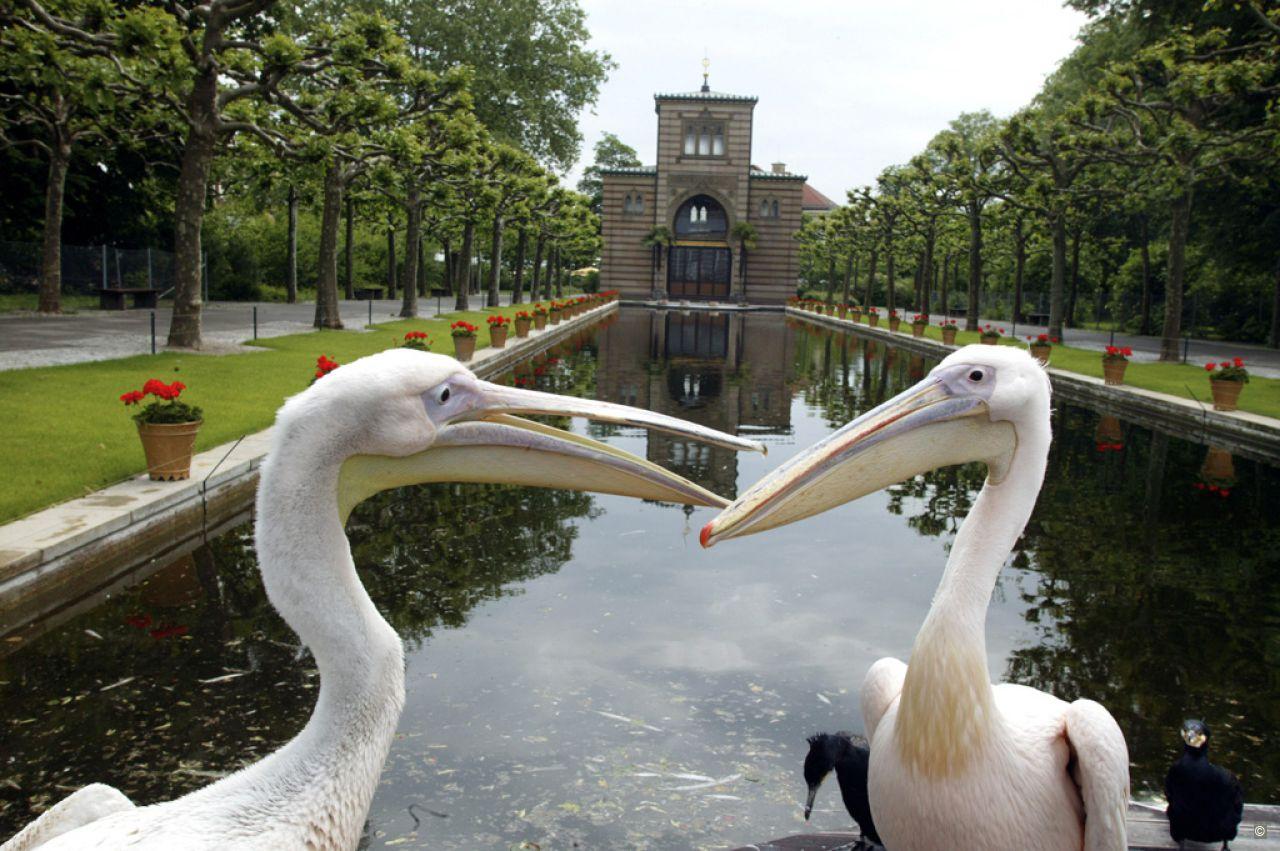
Name of Monument:
The Damascene Hall
Name in original language:
Damszenerhhalle
Location:
Stuttgart, Germany
Responsible Institution:
Wilhelma, Zoological and Botanical Garden Stuttgart
 About Zoological Botanical Garden Wilhelma, Stuttgart
Date of Monument:
1864
Architect(s) / Master-builder(s):
Wilhem Bäumer
History:
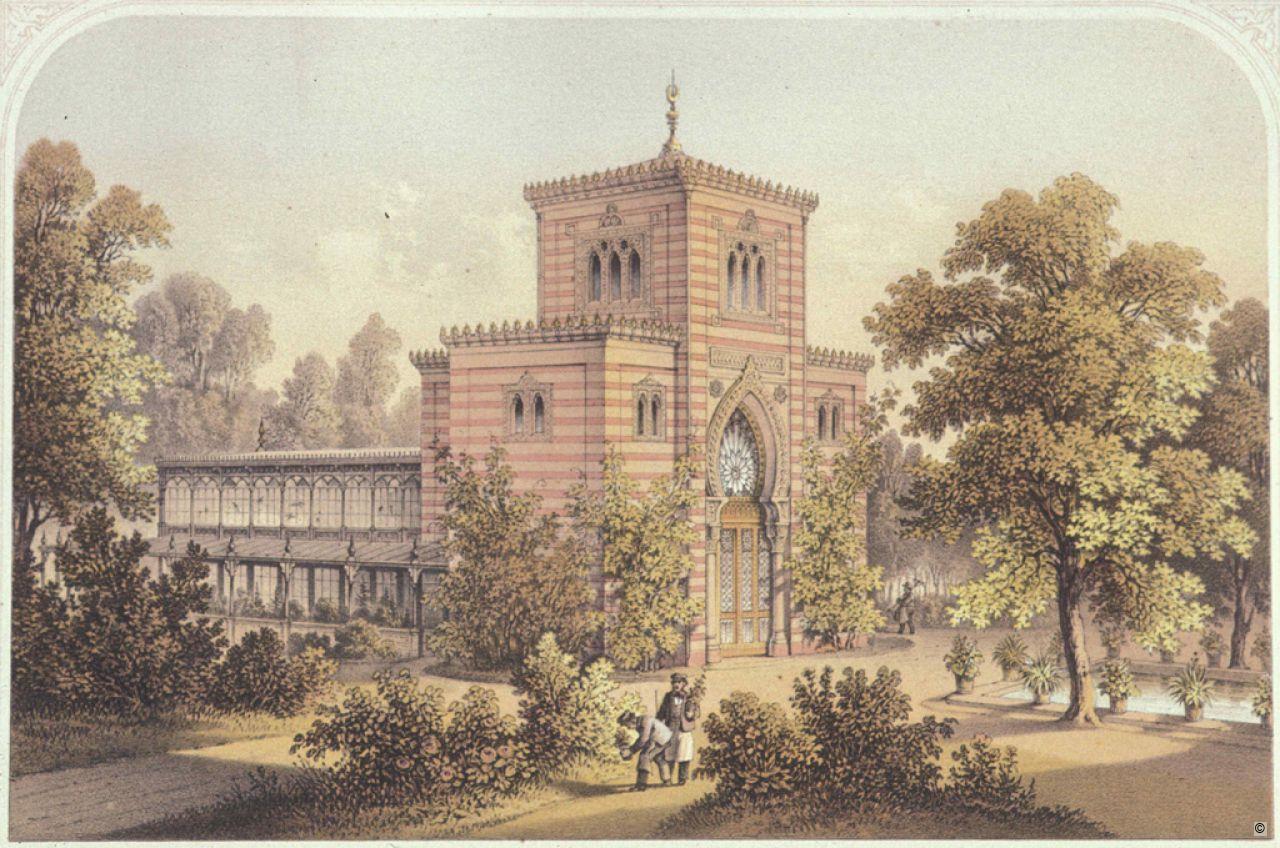
King Wilhelm I of Württemberg commissioned to Karl Ludwig von Zanth in 1837 the design of Moorish style buildings for his Wilhelma garden. The architect planned and built all the buildings with the exception of the Damascene Hall.
The idea was not to reproduce faithfully the Islamic art but to lend an “oriental” flair to the garden. The mention of an “oriental garden” conjured up visions of elegance, luxury, colourful brilliance, seduction and eroticism.
The Moorish style recalls the Islamic art of Spain and North Africa between the 12th and 15th centuries which reached its zenith in the Alhambra. It was fashionable in 19th century: Wilhelma is also known as the “Alhambra on the river Neckar” and other buildings – synagogues in Berlin and Vienna for example – were built in the Moorish style.
Description:
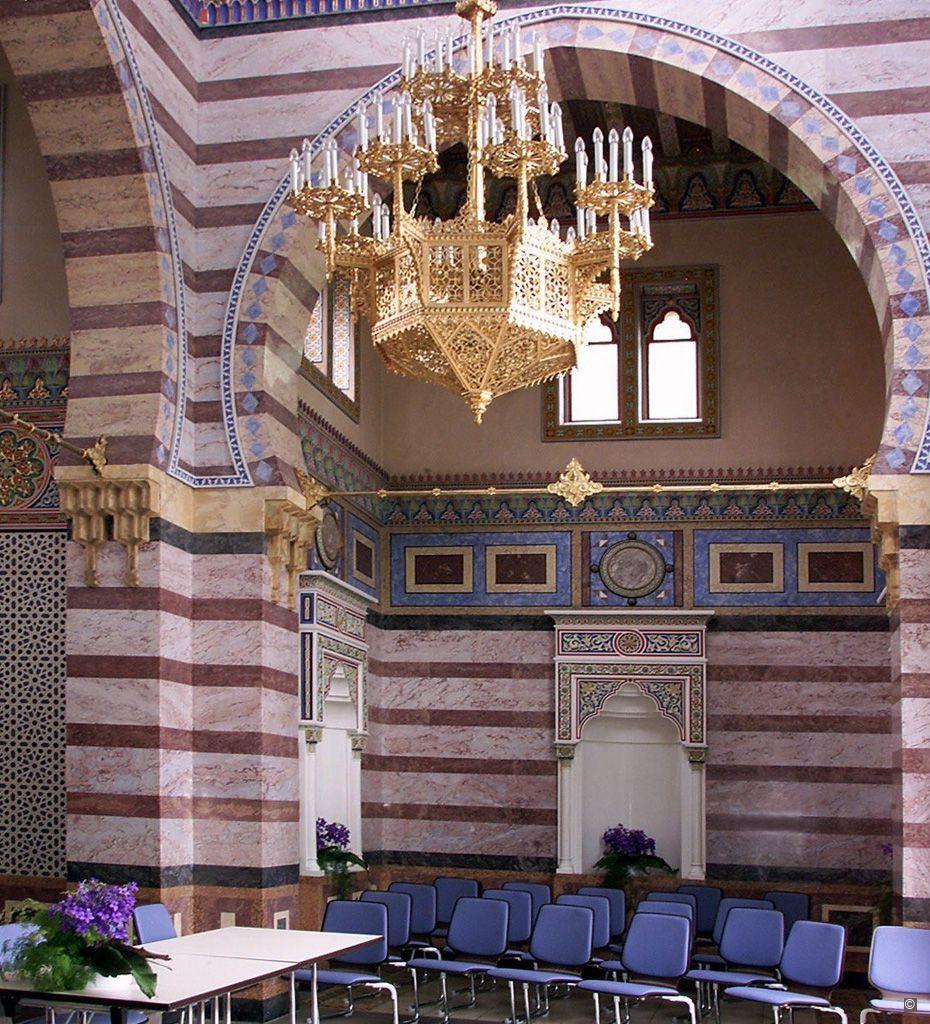
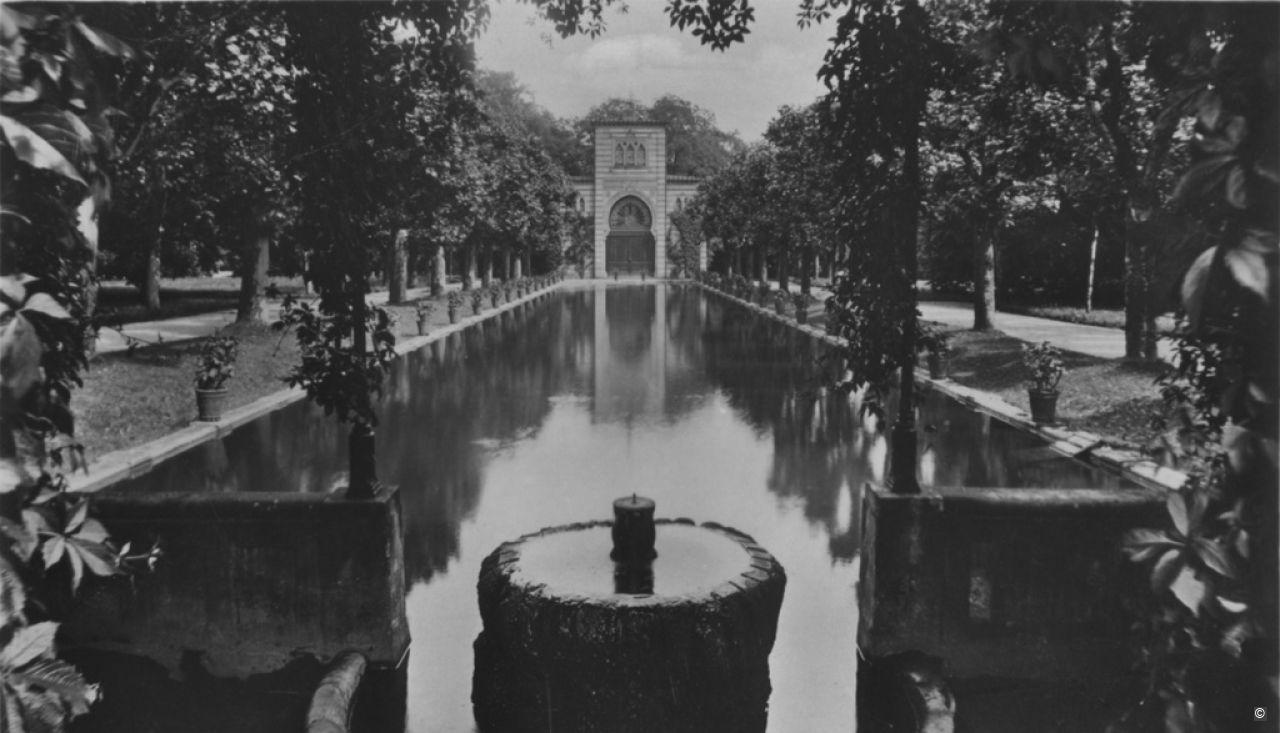
In the eastern part of Wilhelma, towards the R. Neckar, is the Damascene Hall. It is the only one of the historical buildings that was not built by the royal architect Karl Ludwig von Zanth, but, after his death, by Professor Wilhelm Bäumer in 1864. It served Wilhelm I as a building for keeping pheasants and chickens. The name comes from that of the inhabitants of the town of Damascus, which used to be a centre of the Moorish style of building. The Damascene Hall was the only one of the historical buildings at Wilhelma to have survived the war undamaged. Despite this it was still very carefully restored in 1992. A small part of the old Moorish splendour of Wilhelma is to be seen here in the sumptuous ceiling painting, the stucco marble of the walls and the wonderful chandelier.
Citation of this web page:
"The Damascene Hall" in "Sharing History", Museum With No Frontiers, 2026.
https://sharinghistory.museumwnf.org/database_item.php?id=monuments;AWE;de;6;en
MWNF Working Number: DE 007
Related Content
On display in
Exhibition(s)
Sharing History
Travelling | Visiting And “revisiting” The Orient | Overview Travelling | Visiting And “revisiting” The Orient | Revisiting The Orient In Europe – Orientalist ArchitectureDownload
As PDF (including images) As Word (text only)