

 Back
Back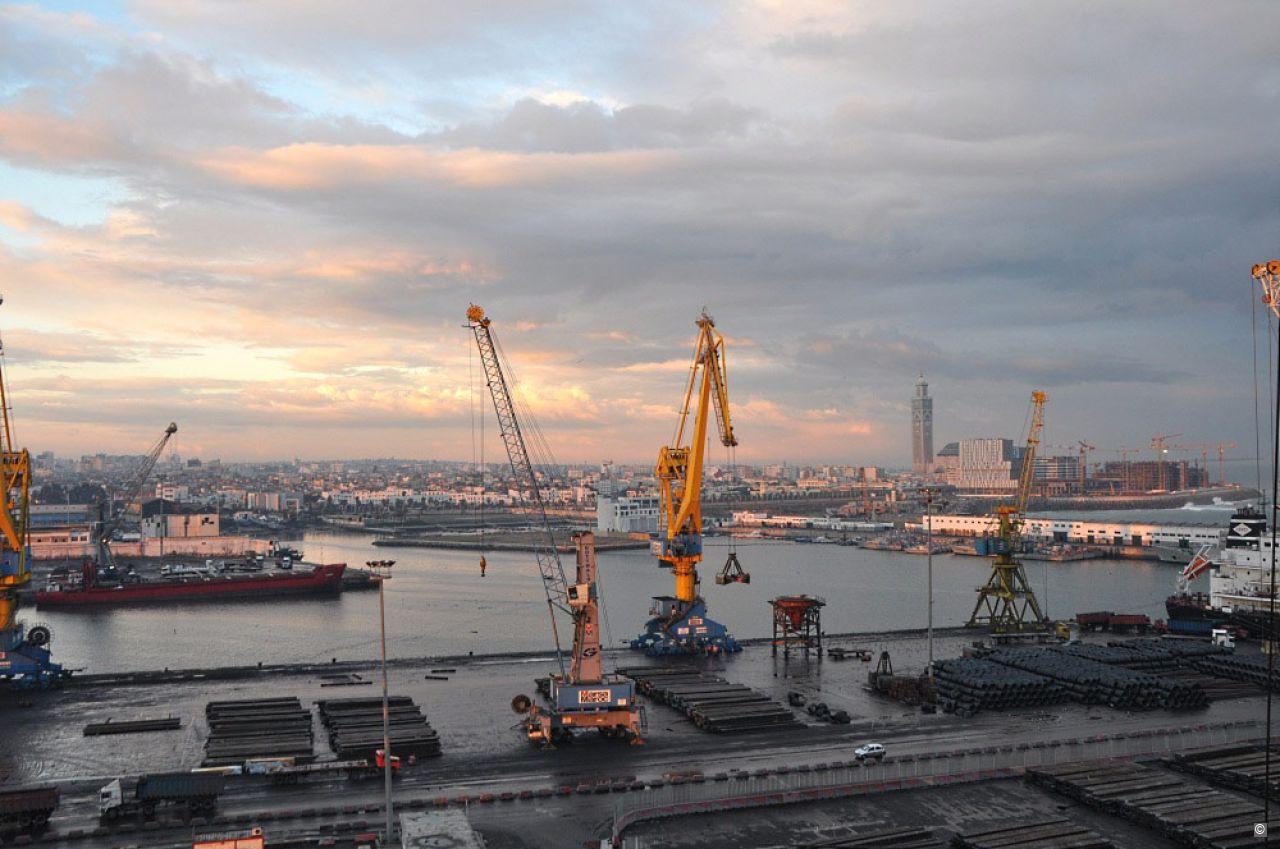
 Add to My Collection
Name of Monument:
Port of Casablanca
Location:
Casablanca, Morocco
Date of Monument:
1904
History:
When the Port of Casablanca began trading in 1572 it was very small and known as the Port of Anfa. At this time, the port was used to export goods such as wheat and wool to the southern Mediterranean. When two centuries later, in 1785, Sultan Sidi Muhammad ibn ‘Abdallah decided to intensify trade between Morocco and countries beyond the southern Mediterranean, the port grew. A century later, in 1873, Sultan Mulay al-Hassan I launched a major project to improve the port's infrastructure and increase its capacity, and it was at this time that the commercial potential of the port was really exploited. Construction lasted several decades. In 1904, under Sultan Mulay ‘Abd al-‘Aziz, a contract was signed with the French company Compagnie Marocaine for the construction and development of a small port exclusively for barges that were used for loading and unloading the ships. The reorganisation in 1907 increased the harbour to 20ha. In 1921 this was increased to 140ha. In 1913 a Moroccan company and a German company, Schneider et Cie, began to co-manage the port.
Description:
In 1913 the port had a number of terminals under several different managements according to its wares. Terminal I, with a capacity of 7000,000 TEU, was managed by Marsa Morocco while Terminal II, with a capacity of 1,000 TEU, was managed by Somaport. There was a terminal for phosphates with a capacity of 19 million tons, operated by OCP; another for citrus with an 18.6ha capacity; and another for ore and hydrocarbons with a 14.5ha capacity. There was also a Terminal Roulier for vehicles, of 9.6ha capacity. After its enlargement in 1921, the port became a major international port with many warehouses, administrative offices and a large lighthouse. It had two gigantic locks, which meant that the harbour covered an area of 140 ha.
Citation of this web page:
"Port of Casablanca" in "Sharing History", Museum With No Frontiers, 2026.
https://sharinghistory.museumwnf.org/database_item.php?id=monument;AWE;ma;18;en
MWNF Working Number: MO 018