

 Close
Collections | Economy and Trade | Financing trade [53 Objects, 4 Monuments]

1780
Kunsthistorisches Museum, Coin Cabinet
Vienna, Austria
 See Database Entry
First minted in 1741, the Austrian Maria Theresia thaler (or dollar) played a key role in Middle Eastern trade. It was declared an official trade coinage in 1857, one year before it ceased to be legal tender in Austria itself. In the Arabian Peninsula, it remained popular into the 20th century due to its high silver content.

1780
Kunsthistorisches Museum, Coin Cabinet
Vienna, Austria
An estimated 400 million Maria Theresa thalers were produced in several European mints and even one Indian mint between 1780 and the early 20th century. From Mediterranean ports, they made their way to Ottoman and Arab lands, including those bordering the Red Sea and the Arab-Persian Gulf.

1790; 1841; 1863
Park of Monserrate, Sintra, Portugal
The greatest economic world power up to the 17th century, Portugal faced grave challenges throughout the 1800s. Setting its economic hopes on South America and Africa rather than the Middle East, it played a key role in the European powers’ 1885 agreement to carve up Africa among themselves for colonialisation and economic exploitation.

1800–1900
Numismatic Museum of the al-Maghreb Bank
Rabat, Morocco
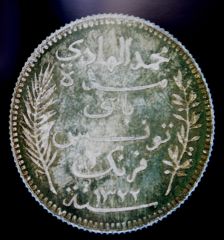
Between the 19th and early 20th centuries, Middle Eastern and North African money was increasingly designed and produced in Europe, even if their designs hardly betray this fact. Moroccan coins like these were minted in Berlin, London or Birmingham.
19th century
Musée de la Monnaie: Banque centrale de Tunisie
Tunis, Tunisia
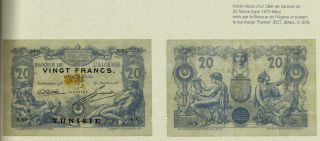
In North Africa, too, currency reforms eventually led to the introduction of European-style coins and bank notes, particularly after France tightened its grip on the region with the occupation of Algeria in 1830 and Tunisia in 1881. This banknote was issued by the Bank of Algeria, the only bank authorised to issue banknotes in Tunisia at the time.
First half of the 19th century
National Museum of Romanian History
Bucharest, Romania
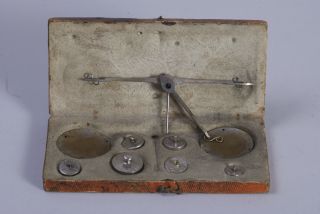
While powerful stock exchanges and national banks controlled major financial transactions in the later 19th and early 20th centuries, many ordinary people and small and medium-scale businesses still relied on the services of traditional moneylenders and private bankers. In many areas these remained the only reliable source for informal credit and funds for some time.

Hegira 13th century / AD 19th century
Sharjah Heritage Museum/ Sharjah Museums Department
Sharjah, United Arab Emirates (Sharjah)
In the Middle East as well as across the Red and Arabian seas, the Arab-Persian Gulf and the Indian Ocean, the Maria Theresa thaler was highly regarded and used in all aspects of life, from dowry payments and jewellery to economic transactions. Muslim pilgrims, too, favoured this internationally accepted coin.
Hegira 13th century / AD 19th century
Sharjah Heritage Museum / Sharjah Museums Department
Sharjah, United Arab Emirates (Sharjah)
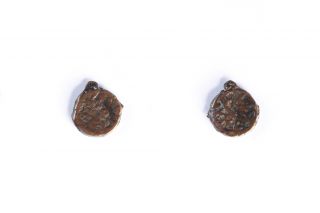
Copper coins like this one, known as Mardhouf al-Qawasim, were minted in Lanja in the Arabian Gulf in AH 1247 / AD 1831. They were used in regions ruled by the Qawasim family at the time, including Sharjah, Ras al-Khaimah, Kalba, Khor Fakkan and Diba.

Unknown
Bibliotheca Alexandrina
Alexandria, Egypt
The Alexandria Stock Exchange was opened in 1883, followed in 1903 by the one in Cairo. Initially focused exclusively on transactions relating to the cotton trade with Europe, the exchange soon became the focus of the city’s entire financial community.
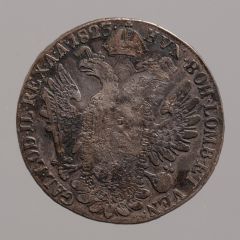
1823
Kunsthistorisches Museum, Coin Cabinet
Vienna, Austria
This thaler with the effigy of the Austrian Emperor Francis I was countersigned in the Hijaz around 1920. Habsburg silver currency, most commonly the Maria Theresa coin, was the most popular throughout the region and used in large quantities to pay for essential commodities.
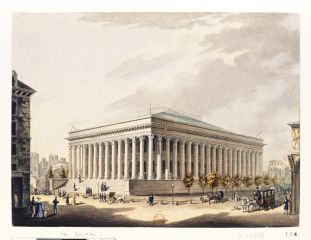
1840
National Library of France
Paris, France
Alongside powerful financial centres such as London and Amsterdam, Paris also provided considerable investment capital for economic and other projects across the Southern Mediterranean. Many brokers at the Paris Stock Exchange dealt in shares and bonds related to reformist government schemes.


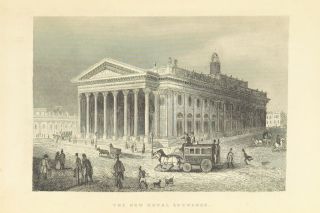
1851 (published)
The British Library
London, United Kingdom
In the later 19th century, the London Stock Exchange became the world’s most powerful financial centre. By 1914, one-third of the public capital available to investors anywhere in the world was listed and traded on the London Stock Exchange. Other European powers tried to establish rival institutions, but none could match it in scale, scope or available resources.

1856
Istanbul University, Nadir Eserler Kütüphanesi (Rare Books Library)
Istanbul, Türkiye
The Ottoman (later Imperial Ottoman) Bank was established in Istanbul in 1856. Sustained by British, French and some Ottoman capital, it functioned as the state’s bank in advancing credits, managing debt, issuing currency and overseeing the state’s budgets.

1860s
The British Museum
London, United Kingdom
This archaeological notebook belonged to Robert Hamilton Lang, the Scottish manager of the Imperial Ottoman Bank in Larnaca, Cyprus, between 1863 and 1872. He later held other IOB posts in Alexandria, Romania and Constantinople, where he became director general of the bank in 1875.

1867
National Museum of Romanian History
Bucharest, Romania
In the 19th century, several regions of the Ottoman Empire used coinage as a symbol of defiance against its overlordship. In Romania, a new monetary law in 1867 led to the first issue of national coins for the United Principalities of Wallachia and Moldavia without any reference to Ottoman sovereignty.


1876
National Museum of Romanian History
Bucharest, Romania
In the 18th and early 19th centuries, the official imperial coinage of the Ottoman Empire was legal tender in all of its provinces, including the Balkans. The circulation of Ottoman coins dominated the money markets in Romania, Moldavia and Wallachia.