

 Close
Collections | Rediscovering the Past | The birth of archaeology | Islamic archaeology [10 Objects, 1 Monuments]

Excavated 1870; 14-15th century
The British Museum
London, United Kingdom
 See Database Entry
Englishman John Turtle Wood gave up his position designing railways in the Ottoman Railway Company to conduct a search for Ephesus (Turkey). Ephesus was an important site in classical antiquity, and duly yielded significant remains. However, among his finds was also Islamic material, including this 14th-century ewer. The value of such relatively recent objects came to be appreciated, and from the turn of the 20th century, studies of Islamic archaeology and architecture took root.

Casket from San Isidoro of León
1872
National Archaeological Museum
Madrid, Spain
The Dean of León Cathedral (Spain) donated this casket to the National Museum of Archaeology in 1869. It was part of the Cathedral Treasury and is an example of the important place of Arab workshops in the Iberian Peninsula in Middle Ages.

Bronze Lamp of Abu `Abd Allah Muhammad III of Granada
1873
National Archaeological Museum
Madrid, Spain
The lamp in this drawing was part of the founding collection of the National Museum of Archaeology in 1868. The publication of this and other objects as well as monuments stimulated interest in the Arab past of the Iberian Peninsula.

1875
National Archaeological Museum
Madrid, Spain
The “Alhambra vase” is a rare example of its type. It is a kind of water-purification device, and comes from the Nasrid workshops. It was acquired in 1875 from the Church of Nuestra Señora de la Asunción in Hornos (Jaén, Spain).

1875-1933
National Museum of Decorative Arts
Madrid, Spain
Spanish archaeologists were interested in traditional techniques, in the hope of making connections between contemporary and historic materials. They thus collected not only antiquities but also contemporary pieces from North Africa. This ceramic dish was brought back from Safi (Morocco).

Remains of the Garments of Prince Philip of Castile, son of Ferdinand III
1878
National Archaeological Museum
Madrid, Spain
The rich silk textile in this 1878 drawing came from the Arab workshops of al-Andalus. It once belonged to Prince D. Felipe, son of King Fernando III of Castile. This was the first publication of an important type of textile, found intact, from a burial.
1885
National Museum of Decorative Arts
Madrid, Spain
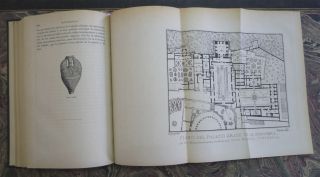
José Contreras’ Description of the Arab monuments is an important publication of the Islamic heritage of Spain. It aided not only research but also conservation. His careful work has proved an invaluable record that is still in use today.

AD 8th century; visited by Alois Musil in 1896
Mafraq District, Jordan
The 8th-century AD desert castle at Qusayr ‘Amra is a World Heritage site. Its famous wall paintings show that figurative art was not prohibited outside religious contexts, at least during the first two centuries of Islam. The abandoned structure was re-discovered by the Austrian Alois Musil in 1898.
Late 19th century – beginning of the 20th century
Istanbul University, Nadir Eserler Kütüphanesi (Rare Books Library)
Istanbul, Türkiye
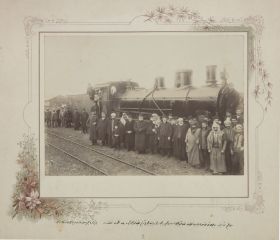
The Hijaz Railway, which passed close to Qasr al-Mushatta, enabled the removal of the facade. The new railway network opened up archaeological sites across the Ottoman Empire. In return for German assistance with the railways, ‘Abd al- Hamid II granted exceptions to the antiquities laws, permitting the removal of objects.

Façade of the Palace of Mushatta
AD 743–744; given by the Ottoman sultan ‘Abd al-Hamid II to Emperor Wilhelm II in 1903
Museum of Islamic Art at the Pergamon Museum, State Museums
Berlin, Germany
The Umayyad façade of Qasr al-Mushatta was a gift from Ottoman Sultan ‘Abd al-Hamid II. A key work of Islamic art, it is a prime example of shared heritage. The monument shows the origins of a cultural era, rooting in the various local traditions of Late Antiquity, and its early development. It thus became seminal for the Islamic Art Department, whose very establishment by Wilhelm von Bode in 1904 is due to this gift.

City: AD 8th – 9th century; photo: 19th century
Museum of Islamic Art at the Pergamon Museum, State Museums
Berlin, Germany
Samarra was temporal capital of the Abbasid Caliphate. It was excavated by Ernst Herzfeld and Friedrich Sarre (first director of the Islamic collection in Berlin) between 1911 and 1913. Study of Samarra contributed to an understanding of the developments and changes in Islamic art at the time.